BC.GAME Reputation, Reviews and Red Flags
 Available in GB
BC.GAME has been live since 2017 and is one of the larger crypto-native casino and sportsbook brands by player count. Its public profile mixes positive coverage from crypto-gambling outlets, mixed user reviews on sites such as Trustpilot and AskGamblers, and recurring industry attention because of high-profile sports sponsorships, a Curaçao-to-Anjouan licence migration and visible BC Originals games. The brand is operated by Twocent Technology Limited in Belize and runs under Anjouan licence ALSI-202410011-FI1, with no UKGC listing. Reading BC.GAME reputation honestly means treating that licence baseline as the anchor and reviews as signals around it.
- Reputation signals worth checking for BC.GAME
- What review-site evidence can and cannot prove
- Recurring BC.GAME complaint themes
- Awards, sponsorship and what they prove
- Licence status and reputation answer different questions
- Support response as a practical reputation test
- Red flags that warrant a pause
- UK context that shapes BC.GAME reputation reading
- BC.GAME reputation in summary
Reputation signals worth checking for BC.GAME
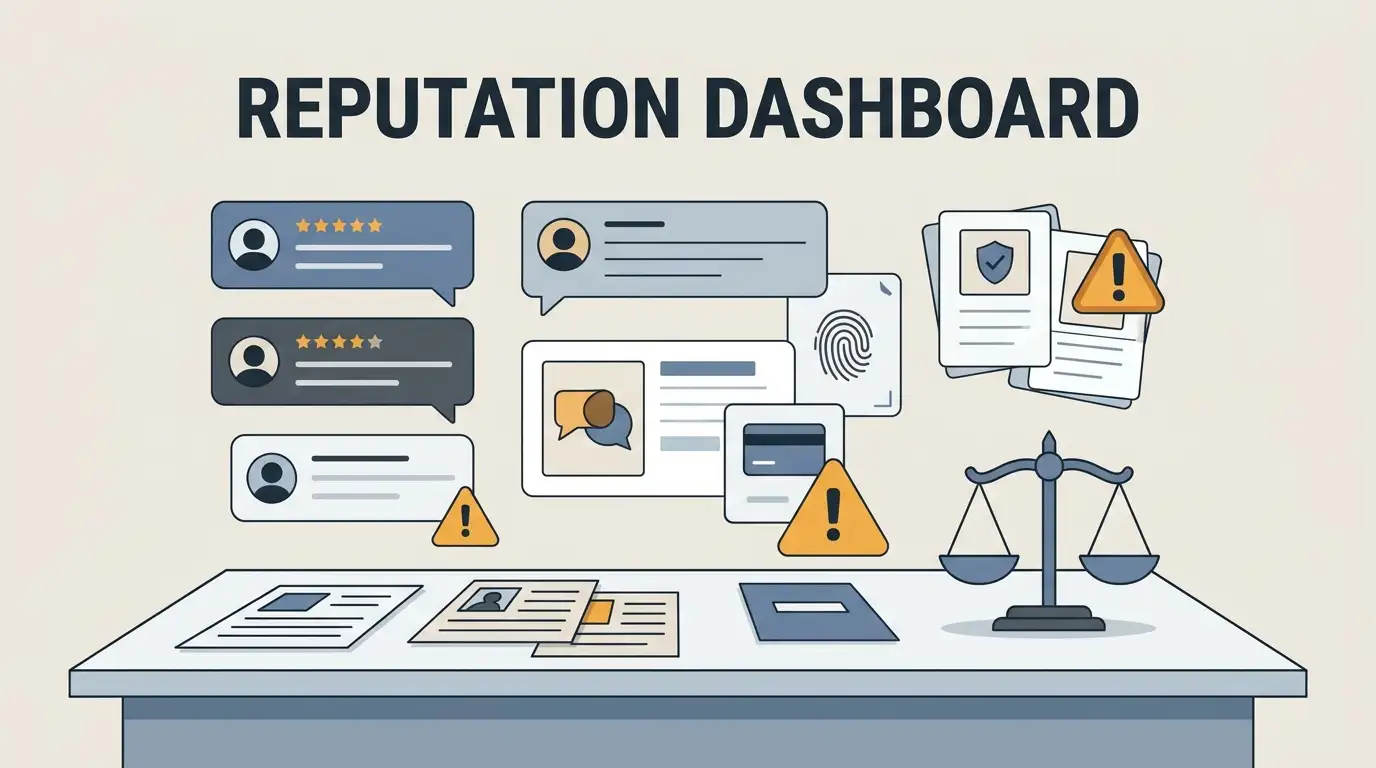
Reputation signals fall into a small number of useful categories. Licence and operator records sit at the top, because they describe formal accountability rather than user sentiment. For BC.GAME those records confirm the Anjouan licence, the Belize operator and the historic Curaçao licence withdrawal. Public review platforms sit below that, capturing the lived experience of large numbers of players: review-site star averages on Trustpilot, AskGamblers and CasinoMeister threads, plus subreddits such as r/onlinegambling. Complaint-mediation records, where they exist, are the third category – for BC.GAME they appear mainly through the operator’s own internal complaints process and through informal forum threads rather than UKGC-approved alternative dispute resolution, because the brand is not on the UK Gambling Commission register. Sponsorships and award listings sit at the edge of the picture and are useful only when they are verifiable; they are visibility signals, not safety signals.
What review-site evidence can and cannot prove
Review sites are useful for spotting patterns. They are weaker as proof of anything specific. A four-star Trustpilot average across many reviews can show that most BC.GAME players have an ordinary experience, but it does not prove that withdrawals always settle on time, that bonus terms are easy to read, or that the brand is licensed in a particular country. Conversely, a low star rating does not prove that BC.GAME is unsafe – many casino reviews online cluster at the extremes because satisfied players rarely post.
The most useful review entries are the ones that name specifics: the deposit method, the bonus opt-in choice, the verification step that was triggered, the support channel used and the outcome. Generic praise or generic complaint carries less weight. For BC.GAME, the most consistent specific themes across review platforms are withdrawal verification at higher amounts, bonus-eligibility disputes, network-selection mistakes on crypto withdrawals, and live-chat response times during busy hours.
Recurring BC.GAME complaint themes
Several themes recur often enough in public reviews and forum posts to be worth treating as patterns rather than one-off events:
- Withdrawal verification on larger payouts. A request that clears below a threshold can be paused at a higher one. This is consistent with the operator’s risk-based KYC model. See the registration guide for the broader account-readiness picture.
- Bonus-rule disputes. Disputes most often involve game-eligibility, maximum-bet rules during wagering, or staged-bonus expiry between deposits.
- Crypto-network mistakes. Users sending a token on the wrong network or omitting a memo/tag create their own recovery problem. These cases are not BC.GAME-specific but show up because the brand is crypto-first.
- Support response variation. Live chat is 24/7, but response detail and follow-up quality vary by issue and time of day. Email replies are slower than chat.
- Sportsbook settlement disputes. Bet-rule edge cases on certain markets attract complaints; the underlying bet rules are inside the sportsbook terms rather than the casino terms.
None of these themes is unique to BC.GAME. They are typical for any large international crypto-first operator and become more visible because of the brand’s player volume.
Awards, sponsorship and what they prove
BC.GAME has used sports and esports sponsorship as a visibility channel, including football kit-front and league-tier deals across several markets. It has picked up gambling-industry awards such as Best Casino Operator at SiGMA Europe 2023. These are real and verifiable, and they help explain the brand’s recognition. They are not, by themselves, proof of UK availability, UK regulatory permission or local consumer protection. Sponsorship of a UK-visible competition does not imply UKGC licensing, and operator awards are voted inside the industry rather than awarded by a regulator.
UK regulators and media have paid attention to offshore-brand sponsorships of UK-facing competitions and clubs. Reading sponsorship-driven visibility as a trust signal needs that context: a logo on a shirt is a marketing exposure, not a regulatory clearance.
Licence status and reputation answer different questions
Licence status describes who can hold a brand to account and through which formal route. For BC.GAME that is the Anjouan licensing authority and the Belize operator. Reputation describes how players have actually fared in practice – withdrawal experience, support tone, bonus disputes, account checks. The two can disagree in either direction: a strictly licensed brand can have a poor reputation, and an offshore brand can have a reasonable user experience. Treating reputation as a substitute for licensing means trusting averaged user sentiment to do the work that a regulator is supposed to do.
For UK readers, the practical rule is: use the BC.GAME licence guide to settle the regulatory question first, then read reputation evidence to decide whether the offshore protection model is something you accept in practice. Mixing them tends to produce false comfort.
Support response as a practical reputation test
Before a meaningful deposit, BC.GAME’s own support flow is a useful test. Ask live chat a specific question – for example, the current restricted-country list, the document types accepted for verification, or whether a particular bonus can be cancelled mid-wagering. The point is not the answer alone; it is the response style. Useful signs are concrete steps, named documents and clear references to the terms. Less useful signs are generic responses that defer to “the rules” without pointing to a specific clause.
Support is 24/7 live chat and email, with no phone line reported. That setup makes written records important. Save chat transcripts and email threads as part of your own paper trail from the first interaction onwards.
Red flags that warrant a pause
- Reviews that claim BC.GAME is UKGC-licensed. The brand is not on the current UK Gambling Commission register.
- Reviews that present a single star rating as the trust verdict, with no detail on deposit method, bonus status, verification stage or support channel.
- Promotional pages that highlight a large welcome figure but bury maximum-bet rules, eligible games, expiry or withdrawal caps.
- Inconsistencies between the licence wording on a third-party page and the operator’s own licence information section.
- Forum threads that read like coordinated posts within a short window – both positive and negative clusters can be artificial.
- Crypto payment advice from third parties that skips network selection, address verification or memo/tag handling.
None of these alone is a verdict, but a combination is a reason to slow down. Treat the licence position from the licence guide as the baseline and weigh reputation evidence against that.
UK context that shapes BC.GAME reputation reading
The UK regulatory and media environment is sensitive about offshore gambling brands aimed at UK consumers. Recent years have brought tightening of advertising rules, scrutiny of sponsorship arrangements involving non-UKGC-licensed brands, and the introduction of online-slots stake limits and financial-vulnerability checks for UKGC licensees. None of those rules bind BC.GAME directly, because the brand is not UKGC-licensed, but they shape the comparison a UK player should make. A UK reader’s expectation often imports UK norms (cooling-off periods, deposit limits tied to GAMSTOP, ADR access, advertising controls) which do not transfer to an Anjouan-licensed brand even when the user interface looks similar.
That gap is the most common source of disappointment in BC.GAME reviews from UK-context users. The brand can behave consistently under its own terms while still falling short of UKGC-style expectations, because those expectations are set by a regulator that has no jurisdiction here.
BC.GAME reputation in summary
BC.GAME has high visibility, a long-running brand presence since 2017, and a profile that combines positive crypto-industry coverage with mixed user reviews and recurring withdrawal, bonus and support themes typical for a large international operator. The licence baseline – Anjouan, ALSI-202410011-FI1, Twocent Technology Limited, no UKGC listing – is the anchor against which the reputation evidence has to be read. Reviews and forum threads can sharpen the picture of day-to-day experience, but they cannot move the regulatory line.
For the broader UK assessment, read this page alongside the BC.GAME UK review, the licence and safety guide, the payments guide and the account setup page. Together they give a more complete picture than any single reputation score on a single site.
Published by the Bcgame team.